
Addressing Employee Discipline
Employee discipline is one of those areas of leadership that most people would rather avoid. No one looks forward to telling an employee that their performance or behavior is not meeting expectations. But avoiding the conversation does not make the issue go away.
Clarity is a form of care. Employees deserve to know when they are doing well, and they also deserve to know when they are not meeting expectations.
During a recent virtual HR Boot Camp, I shared a simple approach with school leaders for navigating these situations: Evaluate. Escalate. Document.
Start With Clear Expectations
Accountability begins with expectations. Before we can hold an employee accountable, we have to ask ourselves: Did we clearly communicate what was expected? Leaders should establish expectations early and address concerns when they first arise - not months later when frustration has built on both sides.
Feedback should also be direct. I am not a fan of sugarcoating constructive feedback or relying on the traditional "feedback sandwich." You can be kind and still be clear. Tell the employee what needs to stop, what needs to start, and what they should continue doing well. The goal is for the employee to leave the conversation understanding exactly what needs to change.
Determine What You're Really Dealing With
Before moving into discipline, determine whether the issue is a "cannot do" or "will not do" situation. If an employee lacks the training, knowledge, resources, or skills to meet the expectation, the response may need to be coaching and support. If the employee understands the expectation, has the ability to meet it, and chooses not to, that becomes a different conversation.
Not every performance issue requires discipline - but every performance issue requires attention.
Escalate When Necessary
Progressive discipline gives leaders a framework for responding to concerns appropriately. For less serious or first-time concerns, coaching may be enough. When the same behavior continues after expectations have been clearly communicated, leaders should be willing to move to the next level of accountability.
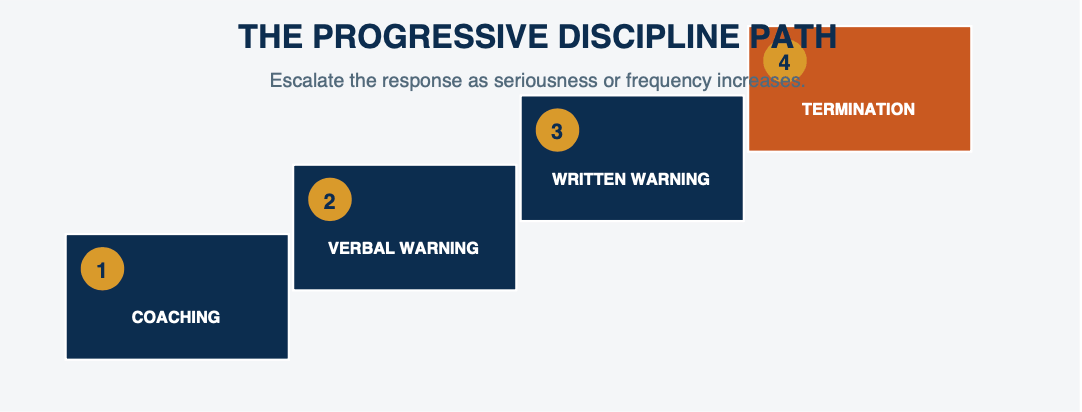
There are also situations where the seriousness of the conduct may warrant skipping steps. When that happens, HR needs to be involved. Progressive discipline should provide an opportunity for improvement, but it should not become an endless cycle of conversations without accountability.
Have the Conversation Before You Write the Letter
One of the most practical pieces of advice I give leaders is simple: have the conversation first. Explain the concern, ask questions, hear the employee's perspective, and verify the facts before issuing formal documentation.
Conversation -> Fact-Checking -> Documentation
Sometimes what you learn during the conversation changes how the situation should be handled. Getting the facts first helps ensure the final documentation accurately reflects what occurred.
Document, Document, Document
I cannot stress this enough: documentation matters. You may remember every conversation you had with an employee, but months later, someone reviewing the situation will only know what can be supported. An email may memorialize a coaching conversation, a memo may document repeated concerns, and more serious matters may require formal written discipline.
Whatever method is used, documentation should be factual, specific, and objective. Document what happened, the expectation that was not met, previous conversations, what needs to change, and what may happen if improvement does not occur. Think facts - not feelings.
Don't Be Afraid of Accountability
Employees may disagree with feedback or become defensive. That does not mean the conversation should not happen. Do not take the disagreement personally. Return to the facts, the expectations, and the documentation.
Employee discipline should not simply be about creating a paper trail or moving someone toward termination. It should first be about giving an employee a genuine opportunity to understand the concern, correct it, and be successful.
We can coach and hold accountable.
We can support and set boundaries.
We can lead with empathy and still be clear about expectations.
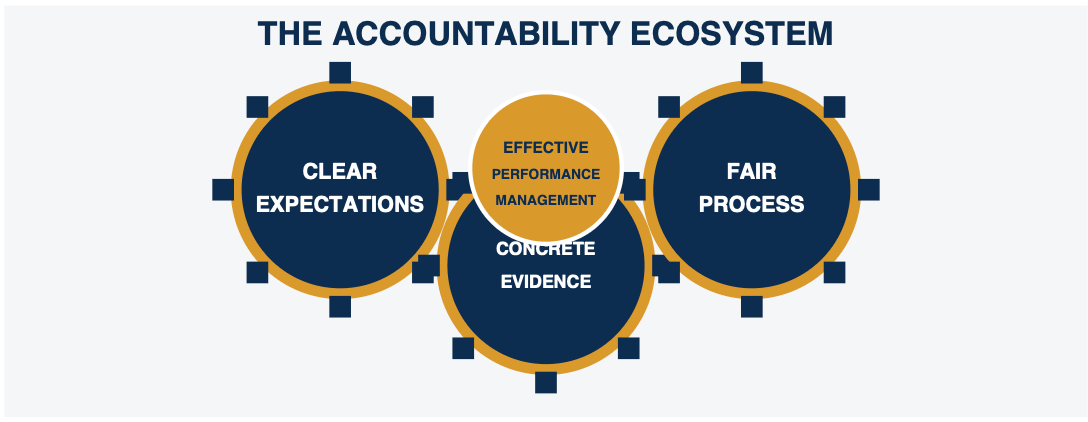
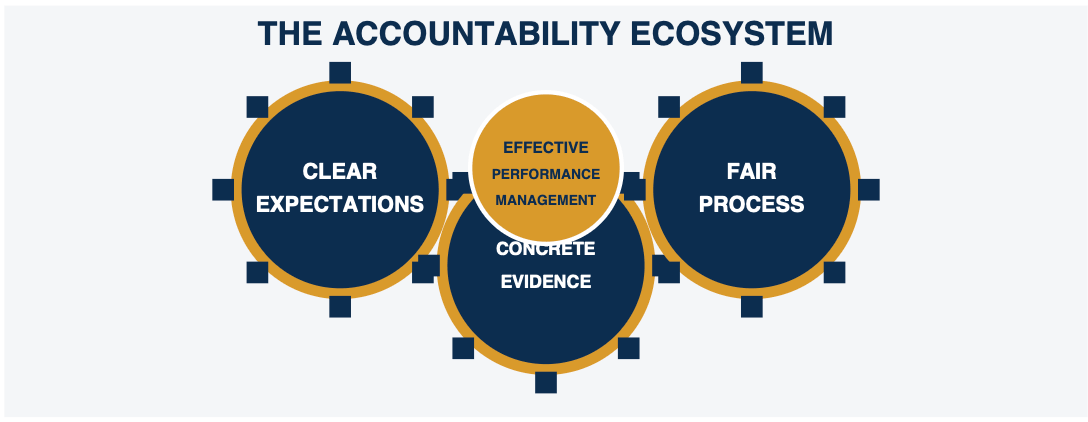
Clear Expectations + Fair Process + Concrete Evidence = Effective Performance Management
Sometimes the most supportive thing a leader can do is have the conversation they have been avoiding. Evaluate the issue. Escalate appropriately. Document the facts. And above all - be clear.