
From Belonging to Mattering: The Retention Strategy We May Be Overlooking
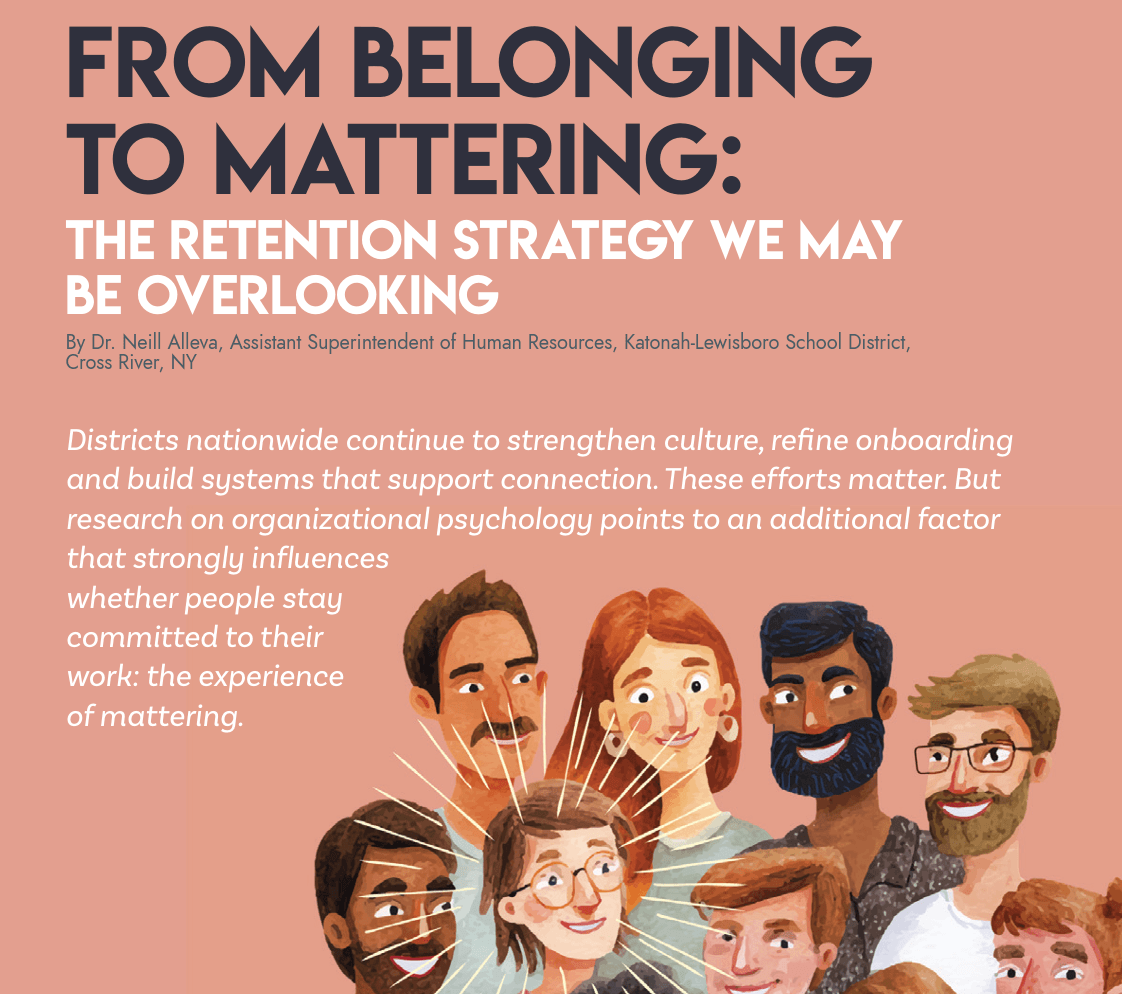
Mattering is the belief that one is seen, valued and needed. Researcher Zach Mercurio, Ph.D., describes mattering as the combination of feeling valued and adding value. His work shows that when people believe they matter, they engage more deeply, persist through challenges and commit more fully to their organizations. In schools, where purpose fuels performance, mattering can be a decisive factor in whether employees remain and thrive.
BELONGING VS. MATTERING
Belonging is the feeling that we’re part of a larger group that values, respects and cares for us and to which we feel we have something to contribute. As such, many districts have invested appropriately in belonging through mentoring, onboarding and relationship-building.
Mattering on the other hand, is the belief that we’re significant to the world around us: Do I have value and do I add value?
The two concepts are complementary. Belonging brings people in. A culture of mattering makes them feel significant once they arrive. An employee can feel welcomed yet still wonder whether their presence or work truly matters. When belonging is not paired with mattering, people may feel included, but not needed, affirmed or noticed.
HOW MATTERING SHOWS UP IN HR PRACTICE
Mattering is communicated through everyday interactions, not programs. Mercurio’s research highlights three core experiences that shape whether people believe they matter:
Noticed. Individuals want to be seen for who they are and for the work they do, both publicly and privately.
Affirmed. People need to hear that their contributions have value and that their strengths are recognized.
Needed. Employees want to know their role has purpose, that their absence would be felt and that their work advances the mission.
These elements align closely with HR’s daily work from onboarding, modeling transformational leadership practices, orientation, feedback, communication, policy design and professional learning.
WHAT HR LEADERS CAN EXAMINE
A mattering lens combined with the acknowledgement that leaders have an outsized impact on those they lead can sharpen retention efforts (and organizational culture) without adding new initiatives. Helpful questions to ask of the organization include:
• What messages tell new hires their work has impact, and their opinions are not only wanted, but needed?
• How do daily conversations contribute to showing employees that they make a difference?
• To what extent do leaders remember the names of staff, their children, their spouses, and then ask specific questions about their lives?
• Do leaders take the time to tell employees that their work is indispensable?
• Do leaders take the time to check in on employees?
Small shifts in these areas can meaningfully influence commitment, and more importantly, bring about a sense of healing for all employees. Who wouldn’t want to work somewhere where they authentically felt a sense of mattering?
MOVING FORWARD
As districts compete for talent, mattering offers a clear, research-aligned framework for deepening retention. It strengthens existing culture work by linking connection to significance. It helps ensure that employees not only feel welcome but also feel essential to the district’s mission.
For human capital leaders, intentionally cultivating both may be the most powerful strategy we have for helping employees choose not just to join our schools, but to stay, grow and contribute with purpose.